 You are viewing the Conyers, GA location.

Homeowners often notice dry indoor air once heating season arrives and wonder if their gas furnace is to blame. While a gas furnace does not directly remove moisture from the air like a dehumidifier, the type of furnace you have and how it operates can absolutely affect indoor humidity levels. Understanding why this happens helps you protect comfort, health, and your home during colder months. Here’s what our experts in heating in Conyers, GA can tell you about your gas furnace and indoor humidity.
How Gas Furnaces Can Contribute to Dry Indoor Air
Many older gas furnaces use atmospheric combustion. These systems draw combustion air from inside the home. As warm air is exhausted through the flue, it creates negative pressure indoors. That pressure pulls cold, dry outside air into the house through small gaps around doors, windows, and the building envelope. Over time, this steady air exchange can significantly reduce indoor humidity. Dry air often shows up as:
- Dry skin, irritated sinuses, or sore throats
- Static electricity shocks
- Cracking wood floors, furniture, or trim
- Increased dust and airborne irritants
While the furnace is doing its job of heating, the side effect is an uncomfortable living environment that many homeowners associate with winter. That’s why gas furnace safety tips should always include consideration of your home’s indoor air quality.
Sealed Combustion Furnaces Make a Difference
Modern sealed combustion gas furnaces are designed to avoid this issue. Instead of pulling air from inside the home, these systems draw combustion air directly from outside through a dedicated intake pipe. Exhaust gases are also vented outdoors in a sealed system. Benefits of sealed combustion furnaces include:
- Improved humidity control
- Better overall energy efficiency
- Reduced drafts and cold spots
- Enhanced safety and indoor air quality
Premier Heating & Air frequently recommends sealed combustion furnaces for homeowners upgrading older systems in Conyers who want better comfort along with reliable heating and tips on keeping your gas furnace running safely.
Why Heated Air Feels Drier in Winter
Even with a newer furnace, indoor air can still feel dry during winter. Cold outdoor air naturally holds less moisture. When that air is heated indoors, relative humidity drops even further. The result is warm air that feels dry, regardless of furnace type.
This is why many homes experience dry air every heating season, even when the furnace itself is operating properly. In these cases, adding moisture back into the air is often the best solution.
Whole-House Humidifiers Provide Lasting Relief
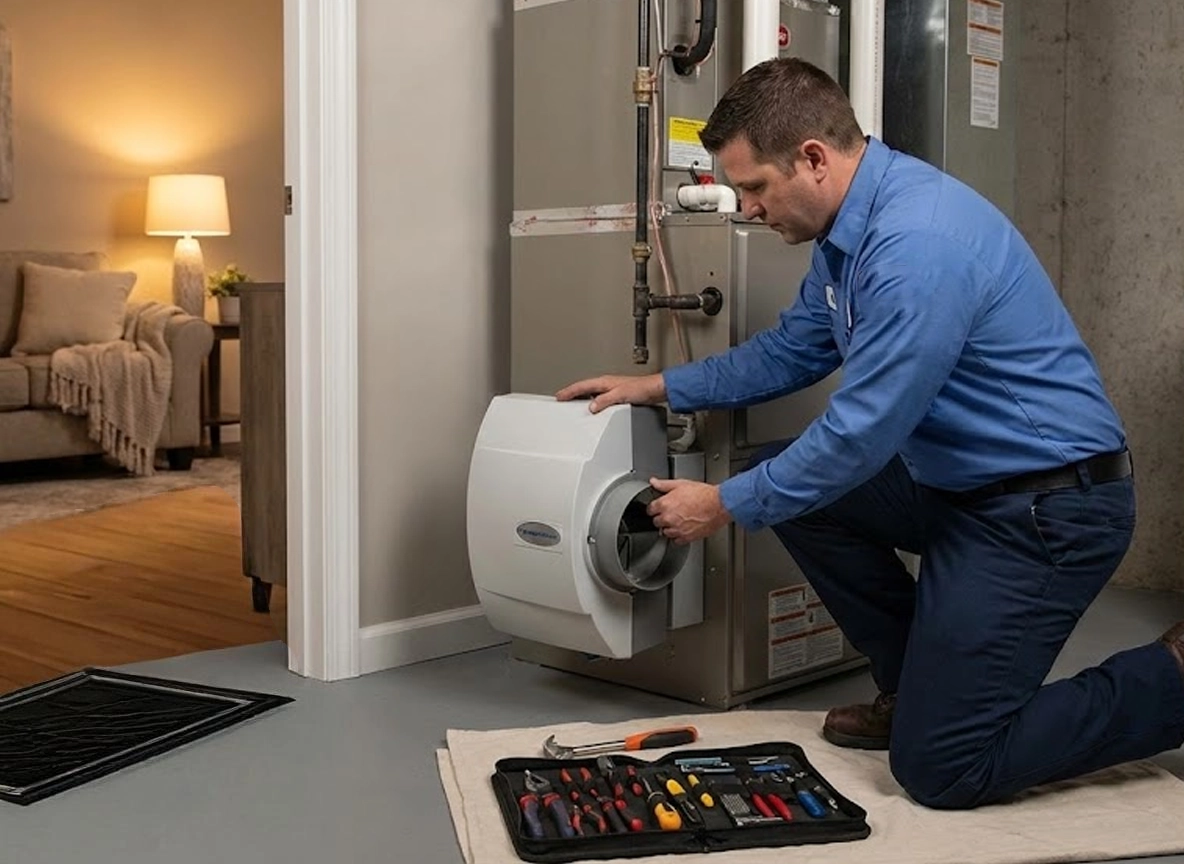
A whole-house humidifier works with your HVAC system to add controlled moisture throughout the entire home. Unlike portable humidifiers that only treat one room, whole-house systems deliver consistent humidity to every space. Advantages of whole-house humidifiers include:
- More comfortable indoor air at lower thermostat settings
- Relief from dry skin, sinus irritation, and respiratory discomfort
- Protection for wood floors, furniture, and musical instruments
- Reduced static electricity and airborne dust
Premier Heating & Air installs whole-house humidifiers that are properly sized and calibrated for your home, ensuring balanced humidity without over-humidification.
When to Consider Furnace Replacement or Humidity Solutions
If your home has an older atmospheric furnace and persistent dry air issues, upgrading to a sealed combustion furnace may provide noticeable improvement. For homes with newer equipment but ongoing dryness, a whole-house humidifier is often the most effective solution.
If dry winter air is affecting your comfort, scheduling a professional assessment with Premier is the first step toward a healthier, more comfortable home. And if you’ve had furnace issues recently, don’t leave heating problems unresolved—they can affect both safety and indoor air quality.
Frequently Asked Questions
Question: Does a gas furnace dry out indoor air in winter?
Answer: Yes, especially older atmospheric combustion models. These furnaces pull air from inside the home for combustion, which causes dry outdoor air to leak in and lower indoor humidity over time, leading to dry skin, static, and discomfort.
Question: What type of gas furnace helps reduce dry indoor air?
Answer: Sealed combustion furnaces are better for humidity control. They draw air from outside for combustion and vent exhaust back outdoors, helping maintain more stable indoor humidity levels and improving comfort and energy efficiency.
Question: Why does heated air feel so dry even with a modern furnace?
Answer: Winter air holds less moisture. When cold, dry air is heated, the relative humidity drops further. Even a sealed furnace can’t add moisture to the air, so the result often still feels dry without humidity control.
Question: How can I fix dry air caused by winter heating?
Answer: A whole-house humidifier is the best solution. It adds moisture to the air through your HVAC system, reducing dryness, static, and protecting wood floors and furniture, while helping you feel warmer at lower thermostat settings.
Question: Should I replace my furnace to improve indoor humidity?
Answer: If your current furnace is old and contributes to dry air, upgrading to a sealed combustion model can help. But if your system is newer, adding a whole-house humidifier is usually more cost-effective for improving comfort.