 You are viewing the Sandersville, GA location.

Late winter in Sandersville brings a familiar mix of cool mornings, mild afternoons, and lingering dampness that can make homes feel drafty at breakfast and stuffy by dinnertime. Those daily swings put extra strain on heating and cooling equipment—and they’re a big reason HVAC maintenance in Sandersville, GA is so valuable this time of year. A simple February–March “comfort check” can help your system keep up now and be ready for spring warmth and humidity.
Why Late Winter Feels So Uncomfortable
When temperatures fluctuate between chilly and mild, your system may run in short bursts, cycling more often than it does in deep winter or steady spring weather. Add in damp air, and rooms can feel clammy even when the thermostat says everything is fine. Older homes may notice drafts near windows in the morning and trapped warmth by evening, while newer homes can still struggle with uneven airflow between rooms.
Step One: Verify Thermostat Settings
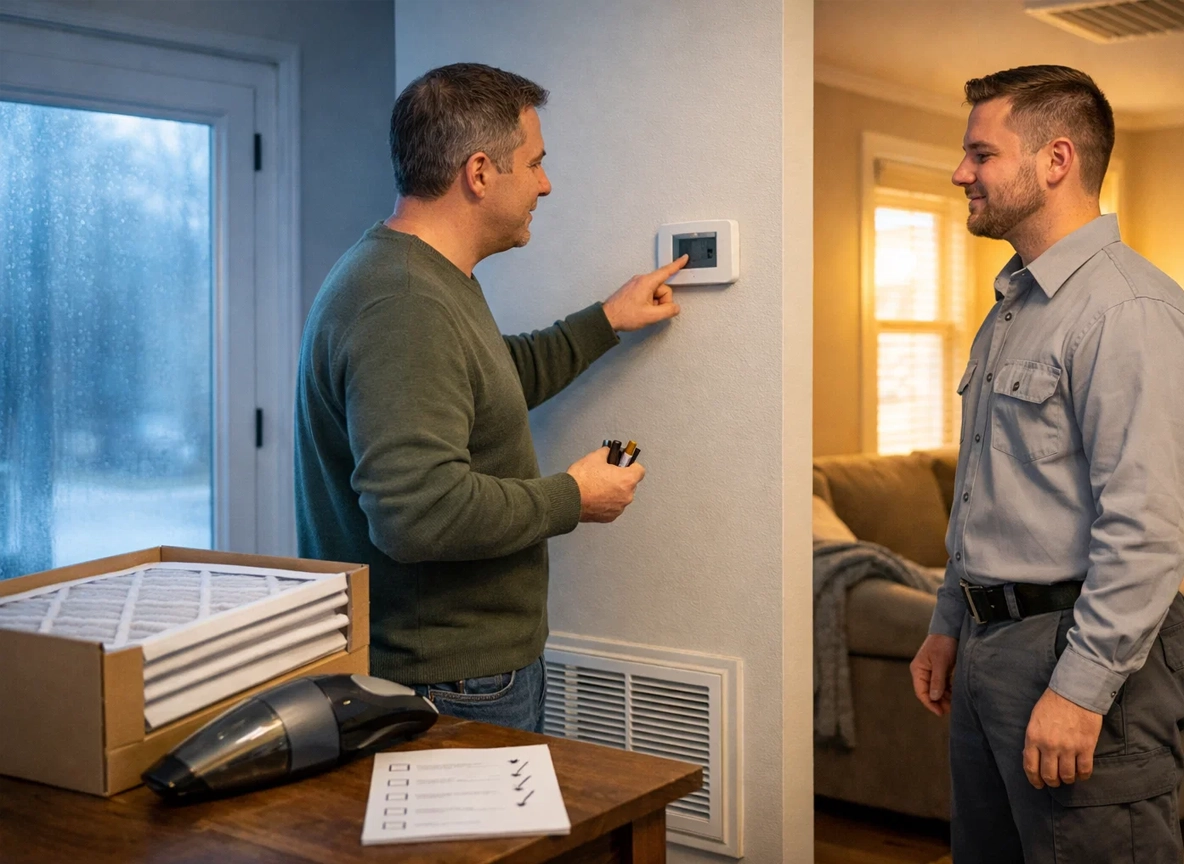
Start with the thermostat. Make sure it’s set to a consistent schedule that matches your household routine. Large overnight setbacks can make mornings feel especially cold, while aggressive daytime settings can lead to stuffy afternoons. If you have a programmable or smart thermostat, confirm the date, time, and seasonal mode are correct. This is also a good time to replace thermostat batteries if applicable—low power can cause inaccurate readings.
Step Two: Change or Upgrade Air Filters
A clogged HVAC air filter is one of the most common causes of uneven comfort. During winter, filters collect dust, pet dander, and debris, restricting airflow just when your system needs to adapt to changing conditions. Check the filter monthly in late winter and replace it if it looks dirty. Homes with pets or allergy concerns may benefit from higher-quality pleated filters that capture more particles without overly restricting airflow.
Step Three: Check Supply and Return Vents
Walk through your home and make sure all supply vents are open and unobstructed by furniture, rugs, or curtains. Don’t forget return vents—blocked returns can cause pressure imbalances that make some rooms colder and others warmer. A quick vacuum around vent covers can also help improve airflow and reduce dust circulation.
Step Four: Note Temperature Differences by Room
Pay attention to rooms that consistently feel colder in the morning or warmer by evening. South-facing rooms may heat up quickly on sunny afternoons, while back bedrooms stay cool all day. Write these observations down. Uneven temperatures can point to duct issues, insulation gaps, or airflow problems that are best addressed before spring humidity arrives.
When to Schedule a Professional Inspection
If your comfort check reveals persistent drafts, hot-and-cold rooms, rising energy bills, or a system that seems to run constantly, it’s time to call in our pro team. A professional inspection can fine-tune airflow, verify safe operation, and prepare your system for the heavier workload ahead. Scheduling service now—before spring heat and moisture set in—helps ensure a smoother transition and more consistent comfort for the seasons to come.