 You are viewing the Sandersville, GA location.

When summer heat settles into Middle Georgia, homeowners start thinking seriously about comfort, energy bills, and reliability. If you’re considering AC installation in Sandersville, GA, it’s important to know that choosing a new system involves much more than simply replacing the old unit with a similar model. The right HVAC partner should guide you through sizing, efficiency, financing, and long-term performance to help you make a confident investment.
Proper Sizing Matters More Than Most Homeowners Realize
One of the biggest mistakes in AC replacement is installing a system that’s too large or too small for the home. An oversized system may cool the house quickly, but it can leave humidity behind and cycle on and off constantly, increasing wear and tear. An undersized system may struggle through Georgia’s hottest afternoons and run nonstop.
That’s why our professional HVAC contractors perform a Manual J load calculation before recommending equipment. This process evaluates square footage, insulation levels, windows, ceiling height, sun exposure, ductwork, and even the number of occupants in the home. Proper sizing improves comfort, efficiency, and equipment lifespan.
Understanding Your System Options
Today’s homeowners have more cooling options than ever before, and each system has unique advantages. Central air conditioning remains the most common choice for homes with existing ductwork. It delivers consistent whole-home cooling and pairs well with modern thermostats and filtration systems.
Heat pumps are becoming increasingly popular in Georgia because they provide both heating and cooling in one system. With Sandersville’s relatively mild winters, many homeowners find heat pumps to be an efficient year-round solution.
Ductless mini-splits work well for homes without ductwork, as well as for additions, garages, bonus rooms, and areas that never seem comfortable. They offer zoned cooling and excellent energy efficiency.
What SEER2 Ratings Actually Mean
SEER2 stands for Seasonal Energy Efficiency Ratio 2, the current industry standard for measuring cooling efficiency. Higher SEER2 ratings generally mean lower monthly energy costs.
While high-efficiency systems may cost more upfront, they can reduce operating expenses over time, especially during long Georgia summers. Your HVAC advisor can help you balance budget, energy savings, and expected system lifespan when comparing models.
What to Expect on Installation Day
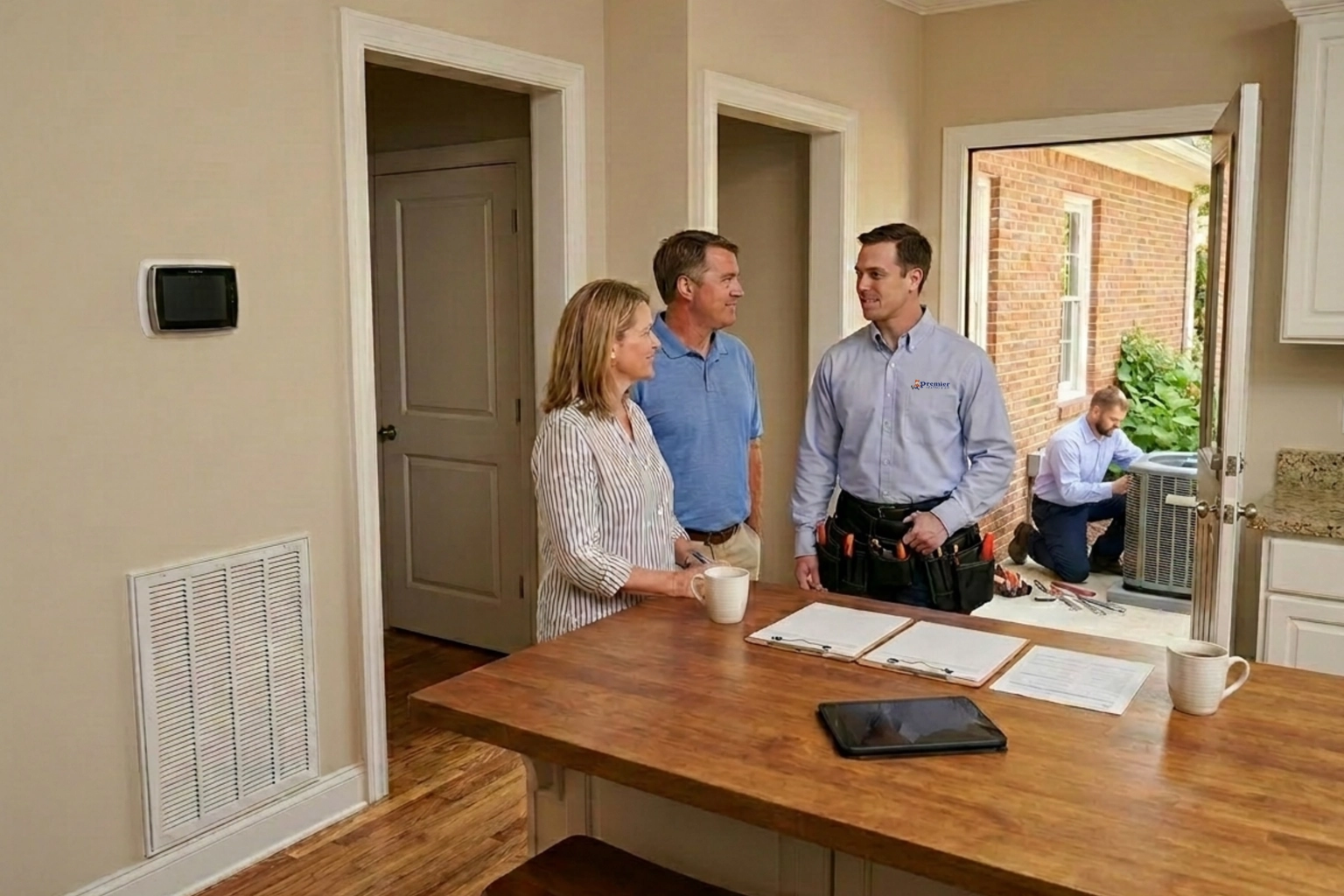
A professional installation team makes the process smooth and organized. In most cases, installation takes one full day. We remove the old equipment, inspect ductwork and electrical connections, install the new indoor and outdoor units, test refrigerant levels, verify airflow, and calibrate the thermostat. Before leaving, we walk you through system operation, maintenance recommendations, and warranty details.
Financing and Rebates Can Make Upgrading Easier
Many homeowners delay replacing aging systems because of cost concerns, but financing and rebates can make a major difference. GoodLeap financing options may include 0% plans, second-chance financing, and no-credit-check programs for qualified buyers.
Georgia Power rebates may also help offset installation costs when you choose eligible high-efficiency equipment. Our trustworthy HVAC team will explain these opportunities clearly and help you explore every available savings option without pressure.