 You are viewing the Nashville, TN location.
Winter in Nashville puts heavy demand on your furnace, often revealing problems that stayed hidden during milder weather. A furnace that is nearing the end of its lifespan rarely fails without warning. Paying attention to early signs gives homeowners time to plan for replacement rather than facing an unexpected breakdown during the coldest days of the year. Premier Heating & Air helps homeowners recognize these warning signs and decide when heating replacement in Nashville is the smartest option.
Frequent Repairs Are Becoming the Norm
An occasional repair is expected over the life of a furnace. When service calls become frequent, it is often a sign that major components are wearing out.
- Repeated issues with ignition, sensors, or airflow
- Breakdowns happen every heating season
- Rising repair costs that add up quickly
If repair expenses start approaching the cost of a new system, replacement typically offers better long-term value and reliability.
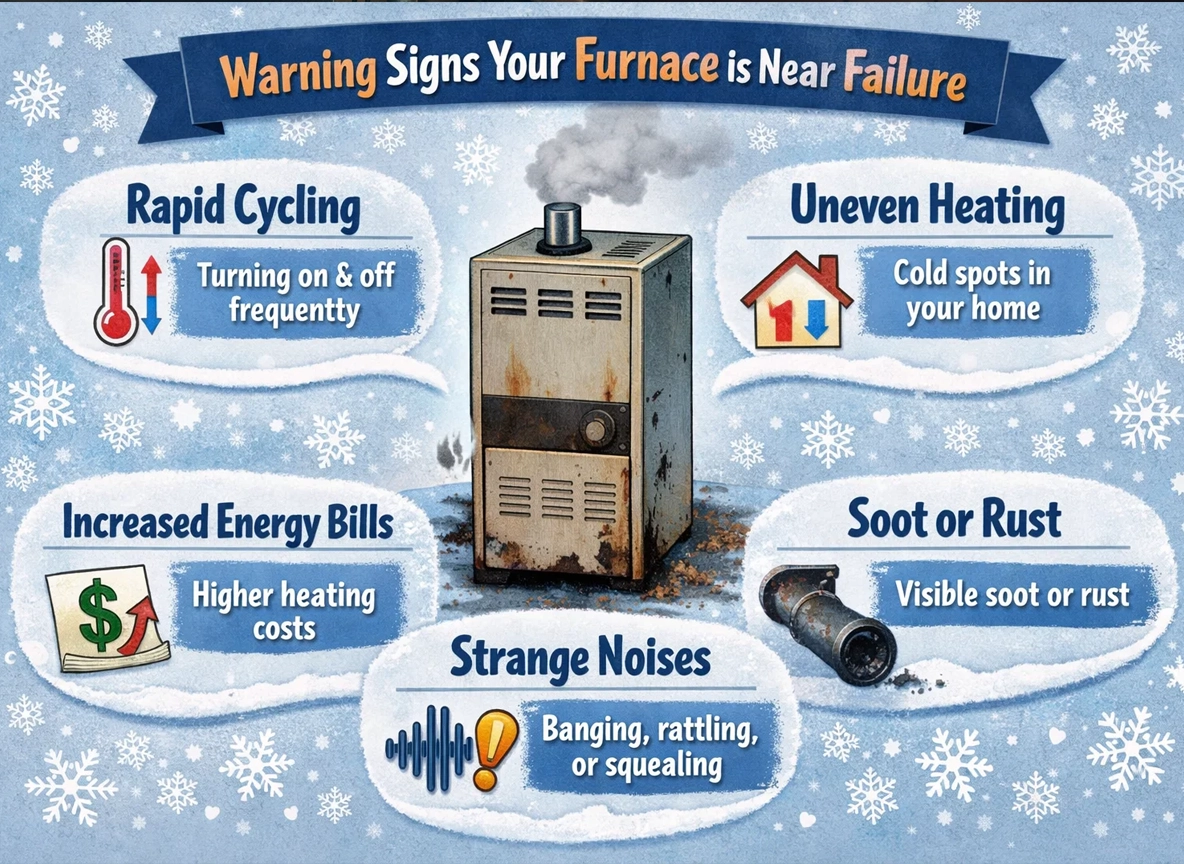
Uneven or Weak Heating Throughout the Home
A furnace struggling to distribute heat evenly may be losing its ability to perform effectively.
- Cold spots in certain rooms
- Long run times without reaching the thermostat setting
- Weak airflow from vents
These symptoms often indicate blower motor wear, duct compatibility issues with aging systems, or declining overall furnace efficiency. Replacing an outdated furnace can restore consistent comfort across your home.
Unusual Noises Are Getting Louder or More Frequent
While furnaces are not silent, new or worsening noises should never be ignored.
- Rattling or vibrating during operation
- Banging or booming at startup
- Squealing or grinding sounds
These noises often point to failing internal components. In older furnaces, noise issues frequently signal that multiple parts are nearing the end of their service life.
Rising Energy Bills Without Increased Usage
As furnaces age, efficiency declines. The system has to work harder and longer to produce the same amount of heat.
- Monthly heating costs are steadily increasing
- Longer heating cycles with less comfort
- Difficulty maintaining a consistent indoor temperature
Newer furnaces are designed to deliver higher efficiency, helping Nashville homeowners control energy costs while improving comfort.
Your Furnace Is 10 to 15 Years Old or More
Age alone is one of the strongest indicators that replacement should be considered. Most furnaces have an expected lifespan of 10-15 years with proper maintenance.
- Older systems lack modern efficiency technology
- Replacement parts may become harder to source
- Increased risk of sudden failure during extreme cold
If your furnace is approaching or beyond this age range, proactive replacement helps avoid emergency situations in the middle of winter.
Visible Rust, Cracks, or Corrosion
Physical deterioration is a serious warning sign, especially when it involves combustion components.
- Rust on the furnace cabinet or burners
- Corrosion around the heat exchanger area
- Signs of metal fatigue
Cracks or corrosion can impact both performance and safety. A compromised heat exchanger is a major reason to replace rather than repair a furnace.
Why Professional Evaluation Matters
Replacing a furnace is a significant decision that should be guided by expert advice. Premier Heating & Air provides professional assessments for Nashville homeowners, evaluating system condition, efficiency, and comfort concerns. A trained technician can help determine whether repair is still practical or if heating replacement is the safer and more cost-effective choice.