 You are viewing the Dublin, GA location.

Introduction to Heating Systems
A reliable heating system is essential for keeping your home comfortable and safe during the colder months. Whether you’re building a new home or upgrading your current setup, understanding your options is the first step toward making the right choice. Gas furnaces are a popular option for their powerful performance and efficiency, while heat pumps offer both heating and cooling capabilities in one system. Electric heating systems provide a clean and dependable alternative, especially in homes without access to natural gas. The best system for your home will depend on several factors, including your heating needs, the size and layout of your home, and the type of energy sources available. Taking the time to evaluate these factors ensures you’ll enjoy consistent warmth and efficiency all season long.
What Is Involved in a New Gas Furnace Installation?
- Selecting the correct furnace size based on your home’s square footage and heating needs
- Removing the existing furnace if one is already installed
- Connecting the natural gas line, ductwork, and electrical components
- Installing the thermostat and system controls
- Testing the furnace to ensure safe operation and proper airflow
Benefits of a New Heating System
Upgrading to a new heating system brings a host of benefits for homeowners. Modern systems are designed to be more energy efficient, which means you can enjoy a warm home while keeping your energy bills in check. A new system is also less likely to break down, reducing the need for frequent maintenance and unexpected repairs. Many new heating systems come equipped with advanced features like programmable thermostats and zone controls, giving you greater flexibility and comfort throughout your home. Plus, investing in a new system can boost your property value and make your home more appealing to future buyers. With improved reliability, efficiency, and convenience, a new heating system is a smart investment for any homeowner.
Gas Furnace Heating: Reliable Warmth for Your Home
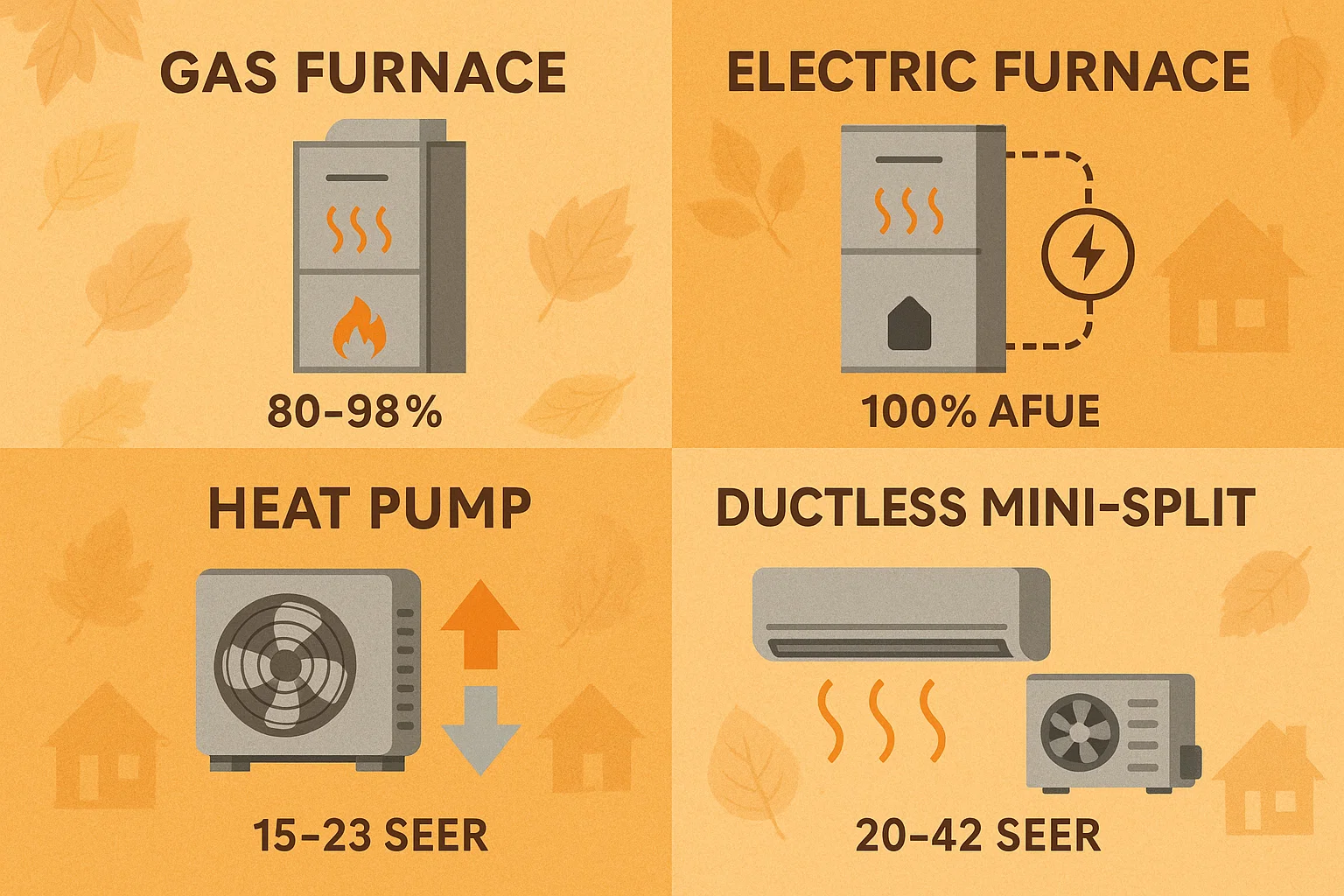
Gas furnaces remain one of the most popular heating options in Georgia homes. Natural gas furnaces are the heating systems of choice for many families in the United States due to their efficiency and effectiveness. They deliver fast, powerful heat that keeps your home comfortable even on the coldest days. Modern gas furnaces are far more efficient than older models, offering high AFUE (Annual Fuel Utilization Efficiency) ratings that help lower your energy bills. The efficiency of a furnace is often measured by its Annual Fuel Utilization Efficiency (AFUE) rating, which indicates how much fuel is converted into heat. If your home already has a natural gas connection, this system offers strong performance and dependable operation, and learning more about gas furnace safety in homes can help you make a confident decision. Regular maintenance keeps it safe, efficient, and long-lasting.
If you notice higher energy bills, frequent breakdowns, trouble maintaining ideal temperatures, uneven temperatures from room to room, or odd noises coming from your existing furnace, these can be signs that your old furnace may need replacing. If your furnace is older than 10 years and has received little maintenance, or is nearing the average lifespan of 15 to 20 years, it may be time to consider replacing it. Older heating systems tend to be less efficient than the latest models and lose efficiency over time.
When replacing an existing furnace, professional technicians will safely disconnect and reconnect gas lines, ensure proper venting, and handle all necessary electrical work. This process is essential for the safe operation of your new furnace. Adhering to safety codes and safety standards during installation helps ensure safe operation and prevents hazards, making safety a top priority throughout the new furnace installation process.
Electric Furnace Options and Benefits
For homes without access to natural gas, an electric furnace provides a reliable and clean alternative. Electric furnace installation involves careful handling of electrical wiring and may require professional electrical work to ensure safe operation. Electric furnaces are known for quiet operation, easy installation, and minimal maintenance needs. Because they convert nearly all their energy into heat, they operate efficiently—but since electricity rates can fluctuate, comparing options like electric furnace versus heat pump can help clarify long-term energy costs. Propane furnaces are another alternative for homes without access to natural gas or electric heating. Premier’s experts can evaluate your energy costs to determine whether an electric furnace is the best option for your household.
Heat Pump Heating Systems Explained
A heat pump is an excellent choice for homeowners who want both heating and cooling from one system. Choosing the right furnace or heat pump involves evaluating airflow and ductwork to ensure your home is ready for a new unit. By transferring heat instead of generating it, a heat pump uses far less energy than traditional heating systems. It works especially well in the mild winters of Glenwood, offering consistent comfort with impressive efficiency. Many homeowners pair a heat pump with a backup furnace for optimal year-round performance and reliability.
A properly functioning thermostat is essential for controlling your equipment and maintaining comfort. Optimizing airflow during installation and commissioning ensures your HVAC equipment operates efficiently, preventing hot and cold spots and maximizing system performance.
How to Choose the Right Heating System for Your Home
For homes without ductwork or for those adding heating to specific areas, ductless mini-split systems are a flexible and efficient option. Ductless mini-splits are a versatile HVAC system that can function as both a heater and an air conditioner, providing year-round comfort. Each indoor unit provides zoned comfort control, allowing you to heat only the rooms you’re using. This not only increases comfort but also reduces wasted energy, which is why many homeowners find that ductless systems for home heating are a practical solution. Ductless systems are whisper-quiet, compact, and can be installed almost anywhere, making them ideal for additions, converted spaces, or older homes.
Energy Efficiency
When choosing a heating system, energy efficiency should be a top priority. An energy efficient system not only helps you lower your energy bills but also reduces your environmental impact. Look for systems with high AFUE ratings, which indicate how effectively the system converts fuel into heat. Features like programmable thermostats and zone controls can further enhance efficiency by allowing you to heat only the areas you need. Regular maintenance is also key to keeping your system running at peak performance. If your current system is outdated or starting to lose efficiency, upgrading to a more efficient model can make a noticeable difference in both comfort and cost. Homeowners who prioritize energy efficiency can enjoy a warmer home and significant savings over time.
Cost of Furnace Installation
The cost of furnace installation can vary based on several factors, including the type and size of the new furnace, the complexity of the installation, and your home’s specific requirements. On average, homeowners can expect to pay between $2,000 and $5,000 or more for a new furnace installation. While this may seem like a significant investment, the long-term savings on energy bills and the added value to your home can make it worthwhile. It’s important to also consider the cost of ongoing maintenance, potential repairs, and any additional features or upgrades you may want. Working with experienced furnace installers ensures the job is done right, helping you avoid costly issues down the road and get the most out of your new system.
How to Decide What’s Best for You
The process of new furnace installation begins with accurate load calculations to ensure the right furnace is selected for your home’s heating needs. While each system offers unique benefits, choosing the right one depends on several factors, including your home’s layout, insulation, existing ductwork, and long-term energy goals. Detailed HVAC calculations, such as Manual J load calculations, are essential for optimizing system selection, duct sealing, insulation, and overall comfort.
The installation process includes removing the old furnace, preparing the area, and installing the new unit with all necessary connections, taking into account other factors such as venting, ductwork, and thermostat upgrades. Choosing the right furnace also involves evaluating airflow and ductwork to ensure your home is ready for a new unit.
After installation, homeowners should expect a walkthrough of the new equipment and receive instructions on maintenance. Professional guidance ensures that your system is properly sized and installed, maximizing efficiency and comfort. Premier’s experienced technicians take the time to evaluate your home, explain your options, and recommend a system that fits your budget and lifestyle.
Why Professional Heating Installation Matters
Before work begins, we complete a thorough assessment and preparation to ensure a smooth new furnace installation process. Even the best heating system won’t perform properly without professional installation. Poor sizing or incorrect setup can lead to uneven heating, higher energy bills, and frequent repairs. When you trust Premier for your heating installation in Glenwood, you get expert craftsmanship, dependable service, and a system built to last. Our team ensures your new unit is properly installed, with careful attention to airflow and equipment setup for consistent comfort and efficiency.
After installation, commissioning the new unit involves testing the equipment to verify proper airflow, efficiency, and that all performance standards are met. This step is crucial for maximizing system longevity and homeowner satisfaction.
Investing in a high-efficiency furnace may cost more upfront, but it can help you save money and lower energy bills over time. High-efficiency models use less energy to produce the same amount of heat, resulting in long-term cost-effective comfort. The cost to install a high-efficiency gas furnace typically ranges from $3,300 to $6,900, and in 2025, the installed cost of a new furnace is expected to range from $3,800 to $12,000 depending on equipment type, home size, and installation complexity. Financing options are available to help make your new furnace installation more affordable. Homeowners may also qualify for utility rebates and potential tax deductions or credits when choosing energy-efficient systems, helping you save even more money.
Schedule your appointment today for professional new furnace installation and start enjoying reliable comfort and savings.
Frequently Asked Questions
Homeowners often have questions when it comes to furnace installation and heating system replacement. Some of the most common include: What is the typical cost of furnace installation? How long can I expect my new furnace to last? What are the advantages of choosing a high-efficiency furnace? How can I make my heating system more energy efficient? And what types of heating systems are available for my home? Consulting with reputable HVAC contractors can help you get clear answers and make informed decisions about your heating needs. Whether you’re considering a replacement or a brand new installation, professional guidance ensures you choose the right system for your home and budget.