 You are viewing the Maysville, KY location.
Your HVAC system relies on ductwork to deliver heated and cooled air throughout your home. When ducts are damaged, outdated, or poorly designed, even the best equipment cannot provide consistent comfort. Many homeowners focus on replacing their furnace or air conditioner without realizing that failing ductwork may be the real problem. Knowing when ductwork replacement is necessary helps protect comfort, efficiency, and indoor air quality. We’re experts at duct services in Manchester, KY, and we have some advice about when duct replacement is an optimal choice.
Ductwork Is More Than 10-15 Years Old
Duct systems are not built to last forever. Over time, materials deteriorate, joints loosen, and insulation breaks down. Older ductwork may have been installed using outdated standards that no longer meet modern efficiency or airflow requirements.
If your home still uses original ductwork from decades ago, replacement may be the most effective way to improve system performance. New ducts are properly sized, sealed, and insulated to support today’s high-efficiency HVAC systems.
Uneven Heating or Cooling Throughout the Home
One of the most common signs of failing ductwork is inconsistent temperatures from room to room. Some spaces may feel comfortable while others remain too hot or too cold, no matter how long the system runs.
This often points to collapsed ducts, poor layout design, or restrictions that limit airflow. Replacing damaged or improperly designed ductwork restores balanced air distribution and helps every room reach the desired temperature.
Rising Energy Bills Without Increased Usage
When ductwork leaks or restricts airflow, your HVAC system has to work harder to maintain comfort. Conditioned air escapes into attics, crawl spaces, or walls before it ever reaches living areas.
This wasted energy shows up as higher utility bills, even when usage habits have not changed. Duct replacement eliminates major leaks and inefficiencies, allowing your system to operate more efficiently and reducing monthly energy costs.
Visible Damage or Deterioration
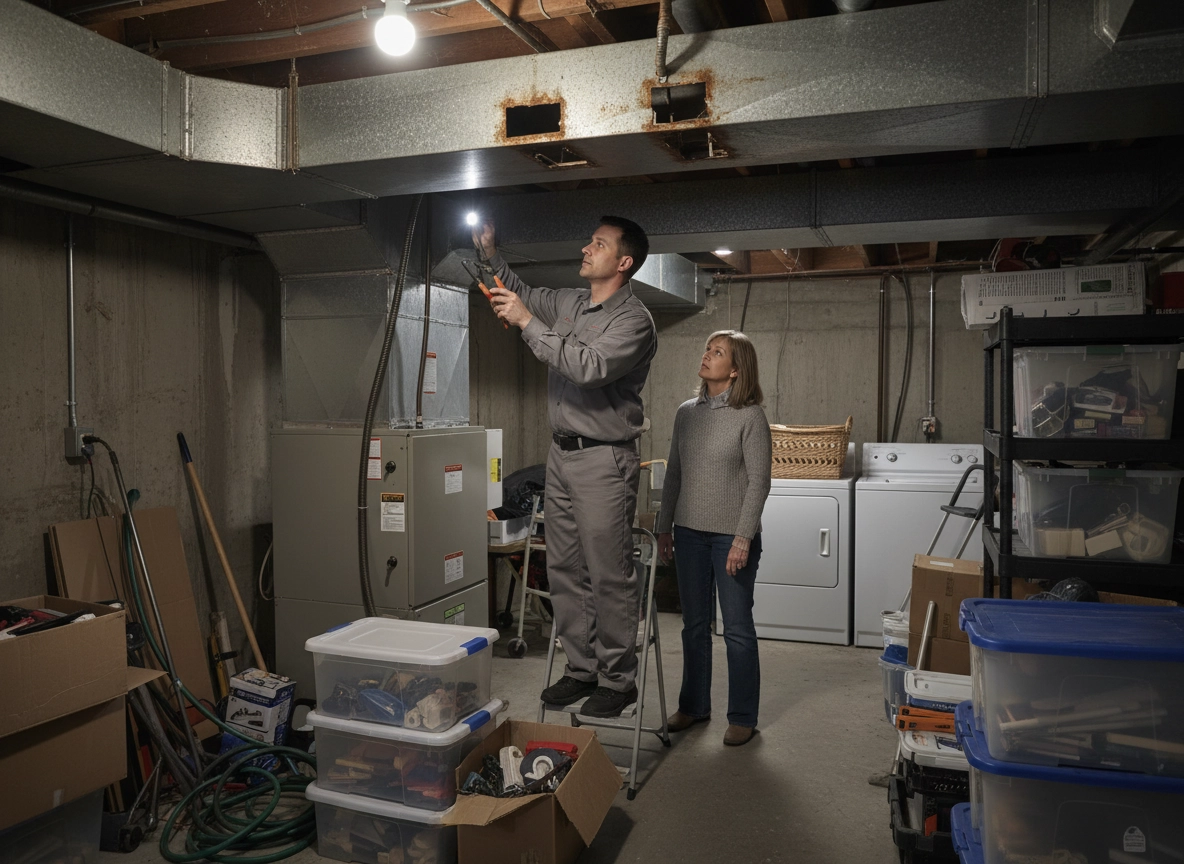
In some cases, duct problems are easy to spot. Crushed sections, disconnected joints, rust, or torn insulation are clear indicators that replacement may be necessary.
Flexible ducts are especially vulnerable to sagging or collapsing over time. Metal ducts can corrode or develop gaps at seams. Once physical damage is present, repairs may only offer short-term relief compared to full replacement.
Poor Indoor Air Quality and Excess Dust
Deteriorating ductwork can pull dust, insulation particles, and contaminants into your airflow. Leaky ducts may draw air from crawl spaces or attics, spreading allergens and odors throughout your home.
If you notice excessive dust buildup, musty smells, or worsening allergy symptoms, failing ductwork may be contributing to the problem. Replacing old ducts helps improve indoor air quality by keeping airflow clean and controlled.
Frequent HVAC Repairs or Short System Lifespan
HVAC equipment connected to poor ductwork experiences unnecessary strain. Restricted airflow and pressure imbalances force components to work harder, leading to more frequent repairs and reduced system lifespan.
If your furnace or air conditioner seems to break down often, addressing ductwork issues through replacement can reduce stress on the system and prevent premature equipment failure.
Get a Professional Evaluation
At Premier Heating & Air, we provide expert duct replacement and duct services for homeowners. Professional evaluation ensures ducts are properly sized, sealed, and installed to support reliable comfort, improved efficiency, and long-term HVAC performance.