 You are viewing the Swainsboro, GA location.

Heat pumps in Swainsboro, GA are a popular choice for homeowners because they provide both heating and cooling using the same core components. Even during winter, your heat pump relies on refrigerant to move heat into your home. When refrigerant levels drop due to a leak, comfort, efficiency, and system safety are all affected. Premier Heating & Air frequently responds to heat pump repair calls in colder months when homeowners are surprised to learn that refrigerant issues impact heating mode just as much as cooling mode.
Why Refrigerant Is Critical Year-Round
Refrigerant is the substance that allows a heat pump to transfer heat. In winter, the system pulls heat from outdoor air and moves it indoors. In summer, the process reverses. A refrigerant leak disrupts this cycle regardless of the season, forcing the system to work harder while delivering less comfort.
Low refrigerant is not a maintenance issue and should never be topped off without finding and repairing the leak. Professional heat pump repair is required to protect the system and restore proper operation.
Weak or Inconsistent Heating
One of the earliest signs of a refrigerant leak is reduced heating performance. Your heat pump may run longer but struggle to maintain the thermostat setting. Homeowners often notice:
- Rooms that feel cooler than usual
- Longer run times without improved comfort
- Heat that feels lukewarm instead of steady and warm
Because heat pumps rely on refrigerant to absorb and release heat, even a small leak can significantly reduce output.
Higher Energy Bills Without Increased Usage
When refrigerant levels are low, your heat pump must run longer cycles to compensate. This leads to higher energy consumption and rising utility bills, even though your daily habits have not changed.
If winter energy costs spike unexpectedly, refrigerant loss may be forcing the system to work inefficiently. We can diagnose the issue and recommend the right heat pump repair before damage spreads to other components.
Ice Buildup on the Outdoor Unit
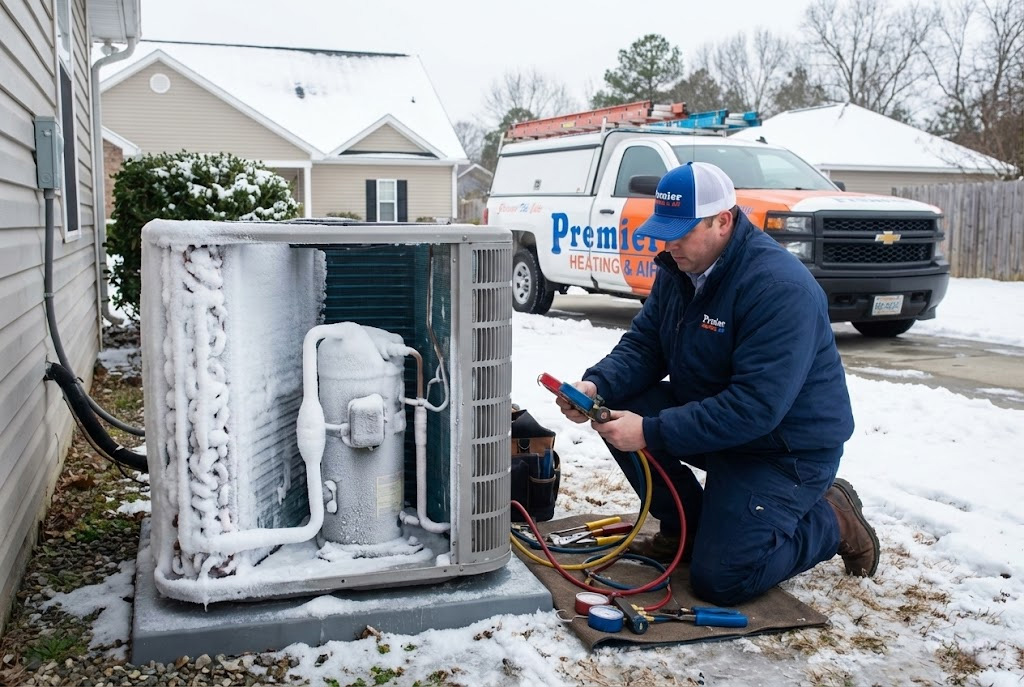
Ice accumulation on the outdoor unit during winter is not always normal. While brief frost during defrost cycles is expected, excessive or persistent ice can indicate a refrigerant problem. Low refrigerant causes pressure imbalances that lead to freezing on the coil. This restricts airflow and further reduces heating capacity. Ignoring ice buildup can result in compressor strain and costly repairs.
Hissing or Bubbling Noises
Refrigerant leaks sometimes produce audible sounds. A faint hissing or bubbling noise near the indoor or outdoor unit may indicate refrigerant escaping through a crack or loose connection. Refrigerant leaks pose safety concerns and can damage the compressor if left unaddressed. Professional heat pump repair ensures the leak is sealed properly and refrigerant levels are restored to manufacturer specifications.
Frequent Defrost Cycles
Heat pumps naturally enter defrost mode in winter, but refrigerant leaks can cause the system to defrost more often than necessary. Frequent defrosting reduces comfort indoors and increases wear on system components. If you notice your heat pump switching modes frequently or struggling to return to heating after defrost, refrigerant loss may be the underlying issue.
Professional Repair Matters
Refrigerant handling requires specialized training, tools, and certification. Attempting DIY fixes or ignoring symptoms can lead to compressor failure or system replacement. We deliver expert heat pump repair, identifying leaks accurately and restoring safe, efficient performance.