 You are viewing the Forsyth, GA location.
Many homeowners assume their furnace is doing its job as long as it still turns on. In reality, aging furnaces in Forsyth, GA can quietly cost you money, reduce comfort, and increase the risk of unexpected breakdowns. Knowing the warning signs of an outdated furnace helps you take action before small issues turn into major problems.
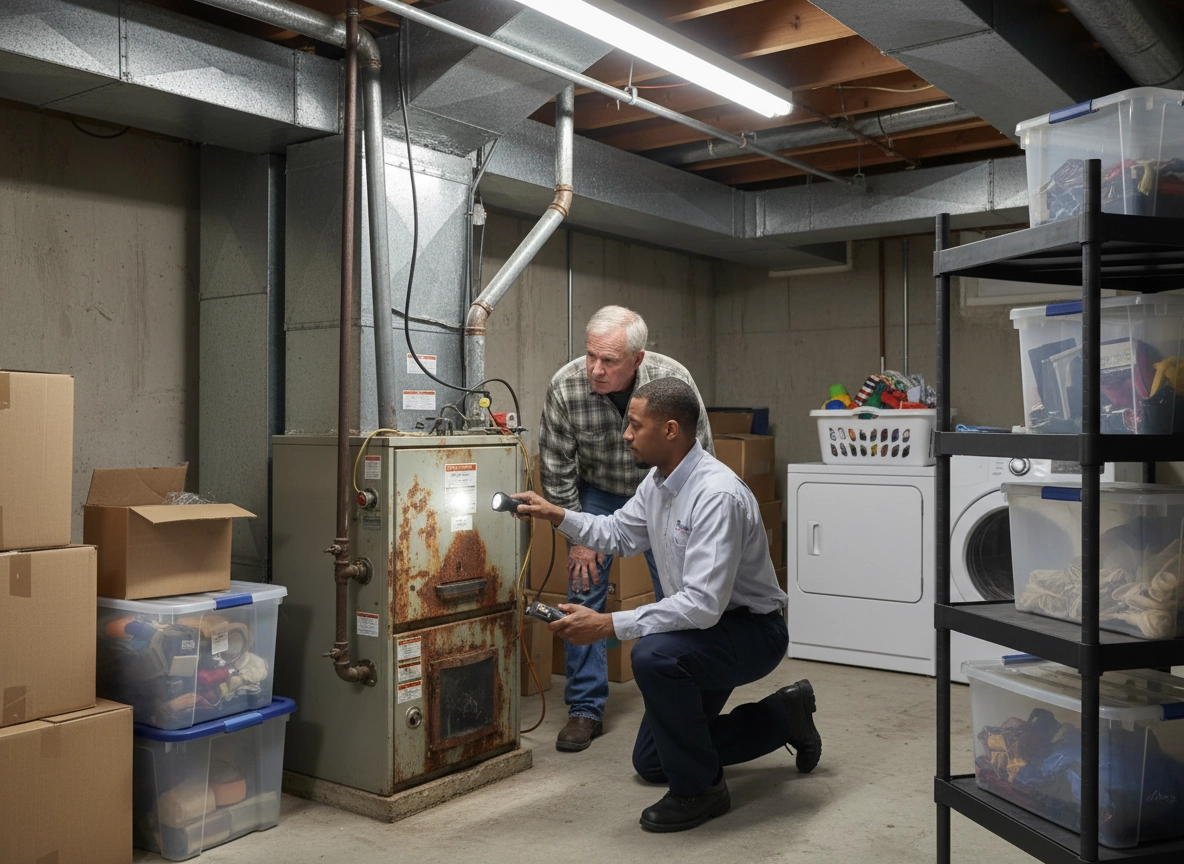
Your Furnace Is More Than 15 Years Old
Most furnaces are designed to last around 10-15 years with proper maintenance. If your system is approaching or past this range, it is likely operating far below modern efficiency standards. Older furnaces were built before today’s advances in energy efficiency, safety controls, and comfort technology.
Even if the unit still runs, internal components may be worn, heat exchangers can weaken, and performance declines year after year. Furnace replacement becomes a proactive investment rather than a reaction to a complete system failure.
Rising Energy Bills With No Clear Explanation
A steady increase in heating costs often points to an aging furnace struggling to keep up. As furnaces get older, they lose efficiency and require more fuel or electricity to produce the same amount of heat.
Common causes include declining combustion efficiency, failing blowers, and outdated AFUE ratings. Newer furnaces deliver significantly higher efficiency, helping homeowners enjoy lower monthly energy bills.
Uneven Heating Throughout Your Home
Cold spots, warm spots, and rooms that never seem comfortable are common signs of an outdated furnace. Older systems often lack the capacity or airflow control needed to heat modern homes evenly.
As furnaces age, they may no longer distribute air effectively through the ductwork. This forces the system to run longer cycles while still failing to provide consistent comfort. Replacing the furnace allows for improved airflow design and better temperature control throughout the home.
Frequent Repairs Are the Norm
Needing the occasional repair is normal. Scheduling service calls multiple times each heating season is not. As furnaces age, components begin to fail more frequently, and replacement parts can become harder to source.
When repair costs start adding up, investing that money into a new furnace often makes better financial sense. A modern system reduces repair needs and offers greater reliability during peak winter demand.
Strange Noises or Odors During Operation
Banging, rattling, squealing, or booming noises can indicate serious internal issues within an older furnace. These sounds often point to loose components, failing motors, or ignition problems that worsen over time.
Unusual odors also deserve attention. Persistent burning smells, dusty odors that never fade, or metallic scents may indicate deteriorating internal parts. Any suspected gas or combustion smell should be addressed immediately by a professional.
Thermostat Compatibility Issues
If your furnace cannot work with modern programmable or smart thermostats, it may be holding back your comfort and efficiency. Older systems often lack the control flexibility needed to support advanced temperature scheduling and zoning. Furnace replacement enables homeowners to leverage modern thermostat technology for improved comfort control and energy management.
Premier Heating & Air provides professional furnace replacement services, ensuring reliable heat, improved efficiency, and lasting comfort through the coldest months.