 You are viewing the Forsyth, GA location.
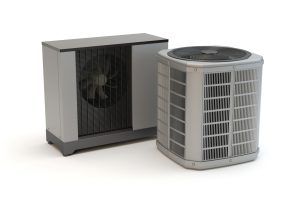
If you’re planning a move or building a new home in Forsyth, GA, there’s one big opportunity you don’t want to miss—upgrading your air conditioning system. An AC “upgrade” doesn’t just mean replacing an old unit with a newer one. Today’s technology offers smarter, more efficient, and more customized options that can significantly improve your comfort and lower your energy bills.
Smart AC Upgrade Options for New Homes
- High-efficiency air conditioning systems: Provide stronger performance, lower energy bills, and use modern refrigerants that are safer for the environment.
- Heat pump installations (air-source or ground-source): Offer both heating and cooling; air-source systems are cost-effective while ground-source systems deliver superior long-term efficiency.
- Central AC with inverter or VRF technology: Ensures powerful cooling with precise temperature control, making it ideal for larger or multi-zone homes.
At Premier, we help homeowners make the right HVAC decisions for long-term satisfaction. If you’re considering an AC installation for your next home, here’s what an upgrade could look like.
Choose a High-Efficiency AC System
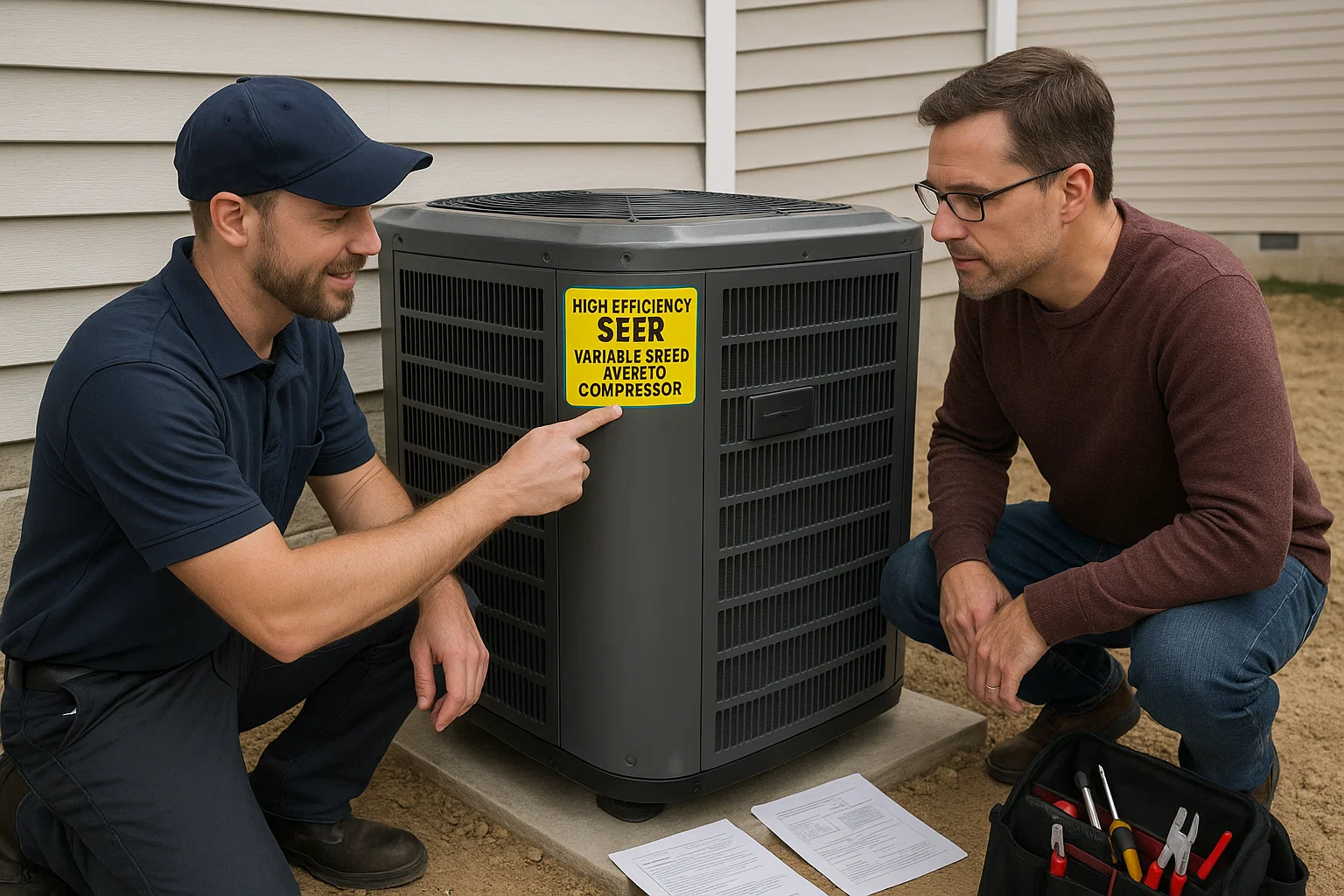
One of the most important upgrades you can make is investing in a high-efficiency air conditioner. New systems offer much better energy performance than older models—especially when you choose a unit with a high SEER2 (Seasonal Energy Efficiency Ratio 2) rating.
Why does this matter? Because in Georgia’s hot and humid summers, your AC works hard. A high-efficiency unit can cool your home using less energy, which means:
- Lower monthly energy bills
- Reduced environmental impact
- Quieter, smoother operation
- More consistent indoor temperatures
Even if your current AC is still functional, a high-efficiency system can offer better comfort and long-term savings that make it worth the upgrade. To understand why, it helps to know how your AC’s compressor works, since it plays a major role in both energy use and performance.
Go Ductless: Benefits of a Mini-Split AC
For homes without existing ductwork—or for homeowners wanting more control over their indoor environment—a ductless mini split system is a game-changer. These systems use compact, wall-mounted air handlers that connect to an outdoor unit, providing direct cooling to specific areas of your home. If you’re curious about how this technology evolved, explore the history of ductless systems and how it became such a popular comfort solution.
Benefits of ductless systems include:
- No ductwork needed, perfect for additions, garages, or older homes
- Zoned cooling with individual room control
- High energy efficiency
- Minimal installation disruption
Whether you’re downsizing or customizing a new space in Forsyth, ductless mini splits give you flexible comfort without compromise.
Improve Comfort with Zoned AC Control
If your home has multiple floors or areas that heat and cool unevenly, a zone control system can be one of the smartest upgrades you make. Zoning divides your home into sections, each with its own thermostat and dampers in the ductwork. This allows you to cool only the rooms you’re using rather than wasting energy cooling the whole house.
Zone control systems offer:
- Targeted temperature control
- Improved energy efficiency
- Personalized comfort for every family member
- Reduced system wear and tear
When installed with a variable-speed air conditioner or heat pump, zoning gives you the ultimate balance of comfort and control.
Why Install a Smart Thermostat with Your AC Upgrade
No AC upgrade is complete without a smart thermostat. These advanced devices learn your habits, adjust settings automatically, and give you full control from your smartphone.
Smart thermostat benefits include:
- Automatic energy savings
- Remote access and scheduling
- Compatibility with other smart home systems
- Insights into energy use and system performance
Whether you’re away for the weekend or just relaxing at home, a smart thermostat helps you stay comfortable while using less energy. During high-demand seasons like late summer, when HVAC systems work overtime, a smart thermostat can also help reduce AC trouble in extreme heat by maintaining more stable indoor temperatures.
Ready to take your comfort to the next level? If you’re moving into a new home or planning an AC installation in Forsyth, GA, Premier is here to help you explore the latest AC upgrades.
Frequently Asked Questions
Question: What does upgrading an AC system mean when buying or building a home?
Answer: Upgrading an AC system means selecting newer, more efficient cooling options instead of a basic or outdated unit. This can include high efficiency air conditioners, heat pumps, ductless systems, zoning controls, or smart thermostats designed to improve comfort, performance, and long term energy savings.
Question: Why should homeowners consider a high efficiency air conditioning system?
Answer: High efficiency AC systems use advanced technology to deliver better cooling with less energy. This helps reduce monthly utility bills, supports environmentally friendly operation, provides quieter performance, and maintains more consistent indoor temperatures compared to older or standard systems.
Question: Are ductless mini split systems a good choice for home upgrades?
Answer: Ductless mini split systems are a strong option for homes without ductwork or for areas needing independent temperature control. They offer efficient operation, flexible installation, room by room comfort, and reduced energy loss since air is delivered directly where it is needed.
Question: How does a zoned cooling system improve home comfort?
Answer: A zoned cooling system divides the home into separate areas, each with its own temperature control. This allows homeowners to cool only the spaces being used, improving comfort, reducing strain on the system, and lowering energy consumption throughout the home.
Question: What role does a smart thermostat play in an AC upgrade?
Answer: A smart thermostat enhances an AC upgrade by offering programmable schedules, remote access, and learning features. It helps optimize energy usage, adapts to daily routines, and provides better control over indoor comfort while supporting overall system efficiency.