 You are viewing the Forsyth, GA location.

If you’re weighing your cooling options, you’ve probably come across the idea of installing a ductless mini split in Forsyth, GA—and for good reason. With Forsyth’s continued growth, homeowners are dealing with a wide range of property types, from brand-new construction to older homes and additions. Choosing between ductless and central air conditioning isn’t one-size-fits-all, and understanding the differences can help you make a confident, cost-effective decision.
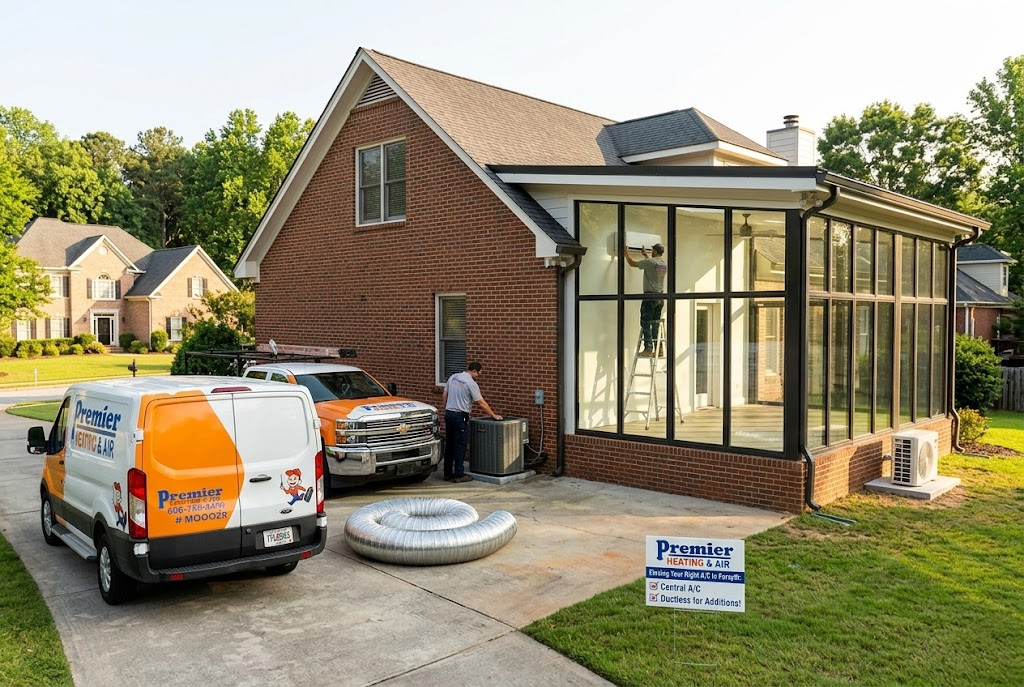
How Central AC Works
Central air conditioning systems use a network of ducts to distribute cooled air throughout your entire home. A single outdoor unit connects to an indoor evaporator coil, and conditioned air is pushed through vents into each room. This setup is common in newer builds and homes that already have ductwork in place.
For whole-home cooling, central AC is hard to beat. It provides consistent temperatures and is generally controlled by a single thermostat. However, it relies heavily on the condition and design of your duct system—leaky or poorly insulated ducts can reduce efficiency and increase energy costs, especially during Georgia’s long, hot summers.
How Ductless Systems Differ
Ductless mini split systems operate without ducts. Instead, they consist of an outdoor unit connected to one or more indoor air handlers, each installed in a specific room or zone. These systems are ideal for homes without existing ductwork, as well as additions, garages, or spaces that never seem to stay comfortable.
One major advantage of ductless systems is zoning. You can independently control the temperature in each area, which helps reduce energy waste and keeps everyone comfortable. They’re also typically more efficient because they eliminate the energy losses associated with ductwork.
Upfront Cost vs. Long-Term Efficiency
Central AC systems often have a lower upfront cost if your home already has ducts in place. However, installing new ductwork can quickly increase the price, especially in older homes.
Ductless systems usually cost more per unit upfront, particularly if you need multiple indoor air handlers. That said, they can offer significant savings over time thanks to higher efficiency and the ability to cool only the spaces you’re using. For homeowners focused on long-term energy savings, ductless is often worth considering.
Flexibility for Forsyth Homes
Forsyth’s housing mix makes this decision especially important. New construction homes are typically designed with central AC in mind, making it a practical and streamlined choice. On the other hand, older homes without existing ductwork—or those undergoing renovations—can benefit greatly from ductless systems.
If you’re adding a sunroom, finishing a basement, or converting a garage, extending your central system may not be efficient or even feasible. Ductless offers a simple, targeted solution without major construction.
Which Is Right for You?
The best system depends on your home’s layout, your budget, and how you use your space. If you want whole-home consistency and already have ducts, central AC may be the way to go. If you’re looking for flexibility, efficiency, and targeted comfort, ductless could be the better fit.
Every home is different, and the right choice depends on a professional evaluation. Reach out to us today for a consultation—we’ll help you compare your options and find the ideal cooling solution for your Forsyth home.