 You are viewing the Maysville, KY location.

Many properties around Maysville include more than just a home—they often feature barns, workshops, garages, or other outbuildings used for hobbies, livestock care, or small-scale farming. These spaces need temperature control during Kentucky’s hot summers and chilly winters. If you’re considering improvements to your property, exploring the possibilities for HVAC systems in Maysville, KY can help you make these spaces more comfortable, productive, and safe.
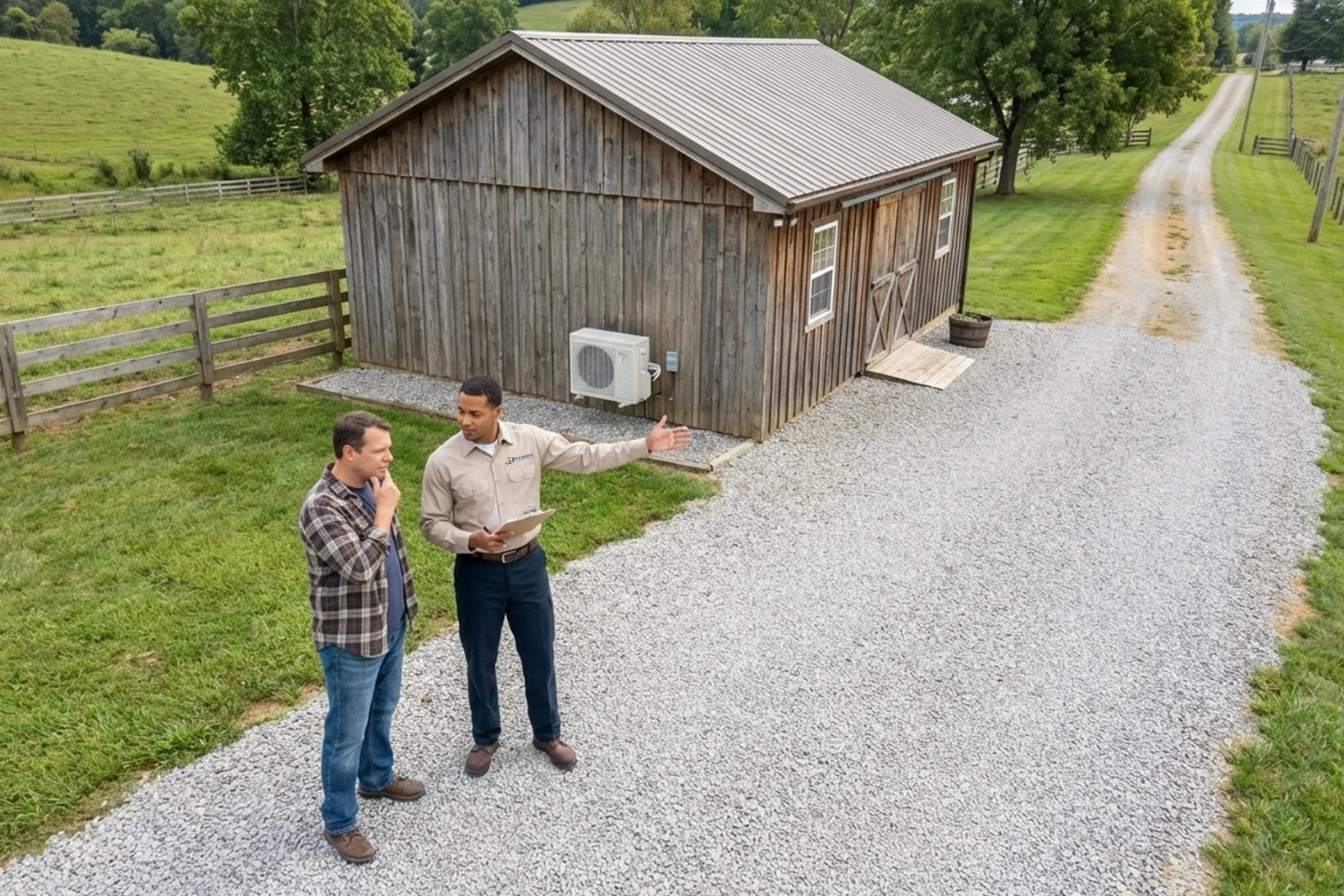
Why Outbuildings Often Need HVAC Solutions
Outbuildings serve many purposes. Some homeowners use them as woodworking shops, equipment storage areas, hobby spaces, or even home offices. Others have small livestock operations.
Without proper heating or cooling, these spaces can become difficult to use during extreme weather. High humidity can damage tools, equipment, and stored materials. Temperature swings affect animals, paints, glues, and other sensitive supplies. The right HVAC solution can help regulate temperature, control humidity, and create a safer environment for both people and equipment.
Common Heating and Cooling Options for Outbuildings
There are several approaches to heating and cooling barns, garages, and workshops. Mini-split heat pumps are a popular option for many smaller buildings. These systems provide both heating and cooling, are relatively energy efficient, and don’t require extensive ductwork. They’re especially useful for workshops or hobby spaces where consistent comfort is important.
For larger barns or open shop areas, unit heaters or ceiling-mounted heaters can provide effective heating during colder months. In some cases, adding ventilation fans or simple cooling solutions may be enough if the building doesn’t require full air conditioning.
Another option is extending your home’s HVAC system to a nearby structure, though this only works in certain situations and requires careful planning to ensure proper airflow and system capacity.
Using Portable Heaters Safely
Many hobby farmers rely on portable heaters during the winter, especially in workshops or smaller buildings. While these can be convenient, they must be used carefully.
Always choose heaters designed for the specific environment, and never place them near flammable materials such as hay, sawdust, or fuel containers. Proper ventilation is also critical. A permanent heating solution installed by professionals is safer and more reliable than relying on temporary equipment year after year.
When to Extend or Install a Separate System
Some property owners consider running ductwork from their home’s HVAC system to an outbuilding. While this can work in rare cases—especially with attached garages—it often isn’t the most efficient or practical option for separate structures.
Independent systems like ductless units, packaged systems, or specialized heaters usually provide better performance for detached barns and shops. These systems can be sized specifically for the building and won’t place additional strain on your home’s equipment.
Partnering With an HVAC Professional
Every hobby farm and rural property is different. The right HVAC setup depends on building size, insulation, electrical capacity, and how the space is used throughout the year.
Working with a knowledgeable HVAC professional can help you explore your options and avoid costly mistakes. An experienced technician can recommend practical solutions that balance comfort, safety, and energy efficiency.
If you’re thinking about improving the comfort of a workshop, barn, or other outbuilding, partnering with a trusted HVAC expert is the best way to find a system that fits both your property and your budget.