 You are viewing the Perry & Warner Robins, GA location.

Keeping indoor air clean can feel like one more thing on an already full to-do list. Between work, school activities, pets, and everything in between, many families don’t think much about their HVAC air filter until comfort or air quality suffers. Choosing the right air filter in Perry, GA can make a noticeable difference in how your home feels and how often your system needs attention—especially for households with kids, pets, or allergy concerns.
Why Your Air Filter Matters More Than You Think
Your HVAC air filter does more than protect your equipment. It captures dust, pollen, pet dander, and other airborne particles before they circulate through your home. In Middle Georgia, where pollen seasons can be long and humidity can encourage dust and mold growth, the right filter helps support healthier indoor air while keeping your system running efficiently.
A filter that’s too basic may let irritants pass through, while one that’s too restrictive for your system can reduce airflow and strain your equipment. Balance is key.
Understanding MERV Ratings
MERV stands for Minimum Efficiency Reporting Value, and it’s the standard used to rate how well a filter captures particles. Most residential filters fall between MERV 4 and MERV 13.
Lower MERV ratings, like MERV 4 or 5, catch larger particles but allow smaller irritants to circulate. These are often fiberglass filters. MERV 8 to 11 filters offer a good balance for many homes, capturing common allergens without overly restricting airflow. Higher ratings, such as MERV 12 or 13, are often ideal for families with allergy sufferers, but they should be used only if your HVAC system is designed to handle them.
Pleated vs. Fiberglass Filters
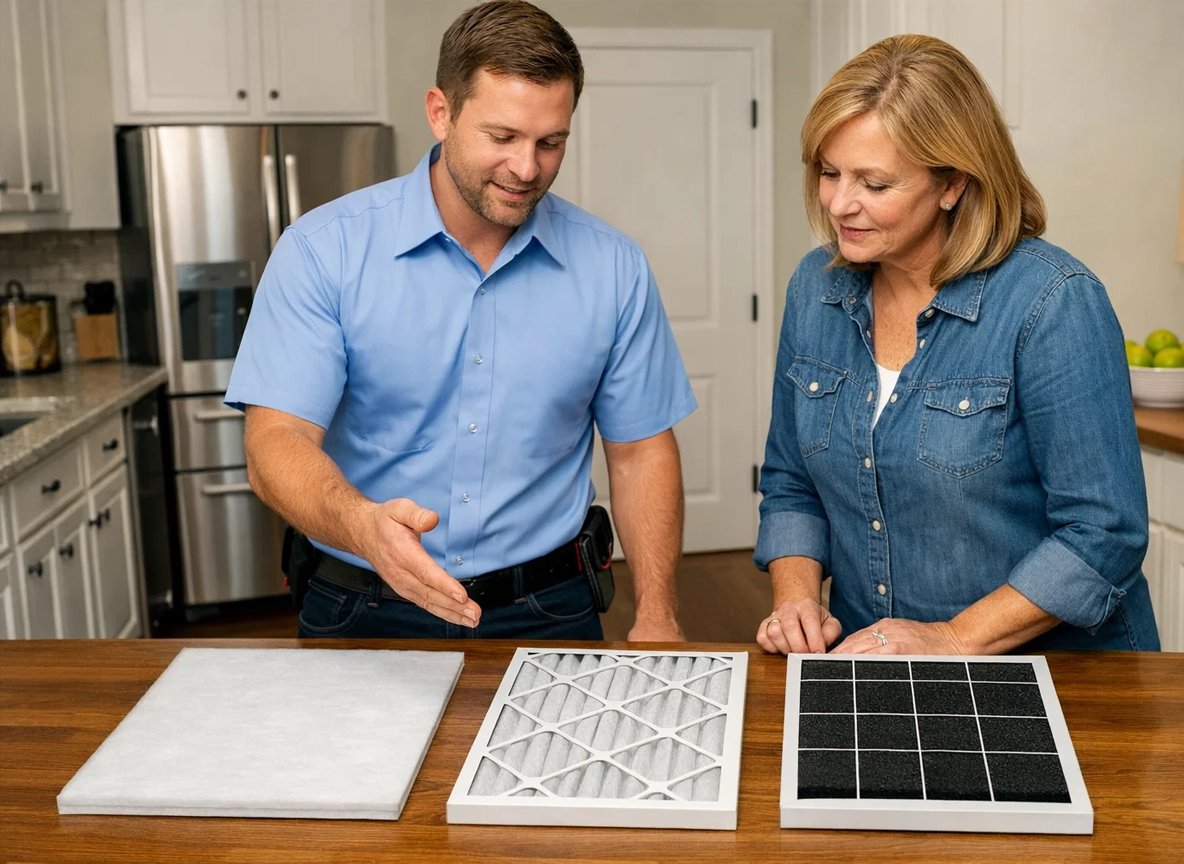
Fiberglass filters are inexpensive and disposable, but they provide minimal filtration. They’re mainly designed to protect your HVAC system, not your family’s air quality.
Pleated filters, on the other hand, have more surface area to trap particles like pollen, dust mites, and pet dander. For busy households in Perry and Warner Robins, pleated filters are often a smart upgrade because they improve air quality without requiring major system changes.
Media Filters for Extra Protection
Media filters are thicker, high-capacity filters that can capture more contaminants and last longer than standard one-inch filters. These are a great option for larger households, homes with multiple pets, or families dealing with allergies or asthma. Because they have more surface area, they can provide better filtration without significantly reducing airflow when properly matched to your system.
How Often Should You Change Your Filter?
Change intervals depend on your household. Homes with no pets and minimal allergy concerns may be fine changing filters every two to three months. If you have pets, young children, or allergy sufferers, monthly changes—or every six weeks—are often best. Media filters may last six months to a year, but they should still be checked regularly.
Get Help Choosing the Best Option
Every home and family is different, and the “right” filter depends on your system, lifestyle, and comfort goals. If you have any questions about what’s best for your home and your family, our team is ready to help you find answers and keep your indoor air as clean and comfortable as possible.