 You are viewing the Perry & Warner Robins, GA location.

Heat pumps are popular because they provide both heating and cooling with excellent efficiency. When a heat pump begins turning on and off too frequently, however, comfort and reliability suffer. This issue is known as short-cycling, and it can happen at any time of year. Even during winter, short-cycling places unnecessary strain on your system and often signals the need for professional heat pump repair in Warner Robins, GA from Premier Heating & Air.
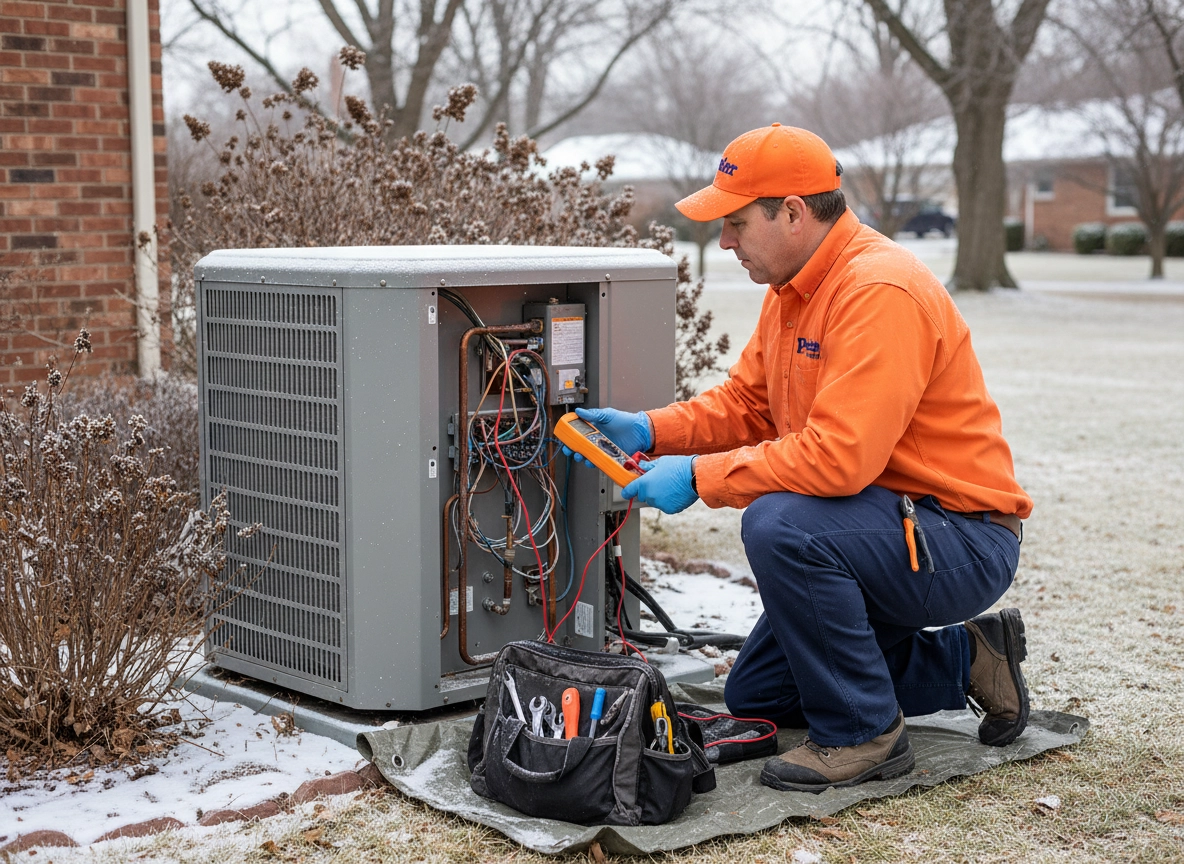
What Is Heat Pump Short-Cycling
Short-cycling occurs when a heat pump starts, runs for a very short period, then shuts off before completing a full heating or cooling cycle. Instead of steady operation, the system repeatedly turns on and off throughout the day, creating heat pump rapid cycling problems.
A properly functioning heat pump should run long enough to evenly heat or cool the home. When cycles are cut short, the system never reaches peak efficiency, and indoor comfort becomes inconsistent.
Common Causes of Heat Pump Short-Cycling
Short-cycling can stem from several underlying problems, some minor and others more serious.
- Dirty or clogged air filters are restricting airflow
- Thermostat placement issues are causing false temperature readings
- Refrigerant levels that are too low or improperly charged
- Electrical or control board malfunctions
- An oversized heat pump that heats the space too quickly
During winter, short-cycling is sometimes mistaken for normal operation, but frequent cycling is never ideal and should be evaluated by a professional.
Why Short-Cycling Is a Problem in Winter
When a heat pump short-cycles during colder weather, it struggles to maintain steady indoor temperatures. This often leads to uneven heating, cool spots, and increased reliance on auxiliary heat, especially when winter heat pump heating failures affect homeowners in Warner Robins. Auxiliary heat uses significantly more energy, driving up utility bills for homeowners in Warner Robins.
Short-cycling also accelerates wear on key components like the compressor and electrical controls. The repeated starts and stops are harder on the system than steady operation, increasing the risk of breakdowns during peak winter demand.
Warning Signs Homeowners Should Notice
Short-cycling is not always obvious at first, but there are clear indicators to watch for.
- The heat pump turns on and off every few minutes
- Indoor temperatures fluctuate instead of staying consistent
- Energy bills rise without a change in usage habits
- The system never seems to run long enough to feel comfortable
If these symptoms appear, continued operation without repair can lead to more extensive damage.
How Professional Heat Pump Repair Resolves Short-Cycling
Premier Heating & Air approaches short-cycling issues with a complete system inspection. Technicians evaluate airflow, thermostat accuracy, refrigerant levels, electrical components, and system sizing. Professional heat pump repair may include:
- Correcting airflow restrictions
- Recalibrating or relocating the thermostat
- Repairing electrical or control issues
- Addressing refrigerant leaks or charge problems
By resolving the root cause, the system can return to efficient, steady operation throughout the winter and beyond.
Short-cycling is not a seasonal inconvenience. It is a warning sign that your heat pump is under stress and operating inefficiently. Addressing the issue promptly helps prevent heat pump no-start emergencies, protect system longevity, reduce energy costs, and restore comfort in your home.
Frequently Asked Questions
Question: Why is short cycling a common heat pump problem?
Answer: Short cycling is common because several heat pump issues can cause the system to start and stop too quickly. Dirty filters, thermostat placement, low refrigerant, electrical problems, control issues, or an oversized system can all interrupt normal cycles and keep the heat pump from running efficiently.
Question: How can I tell if my heat pump is short cycling?
Answer: Your heat pump may be short cycling if it turns on and off every few minutes, never runs long enough to make the home comfortable, or causes indoor temperatures to rise and fall often. You may also notice higher energy bills even though your usage habits have not changed.
Question: Why is short cycling worse during winter?
Answer: During winter, short cycling can keep the heat pump from maintaining steady indoor warmth. The system may rely more on auxiliary heat, which can use more energy. Frequent starting and stopping also adds stress to the compressor and electrical controls, increasing the chance of breakdowns during colder weather.
Question: Can an oversized heat pump cause short cycling?
Answer: Yes, an oversized heat pump can heat or cool the space too quickly, then shut off before completing a healthy cycle. This may sound efficient, but it often creates uneven comfort, poor humidity control, and extra wear. Proper system sizing is important for steady operation.
Question: How is heat pump short cycling repaired?
Answer: Repair starts with a full system inspection. A technician may check airflow, thermostat accuracy, refrigerant charge, electrical components, control boards, and system sizing. Depending on the cause, the fix may involve replacing filters, correcting airflow, repairing refrigerant problems, adjusting thermostat placement, or resolving electrical issues.